Published on Wednesday, September 2 2009
Pardon the brief, self-promotional nature of this post, but I just realized if I don’t get one up soon I’m going to miss the deadline – voting for SXSW Interactive 2010 ends this Friday!

Photo by ehnmark, cc-by license
I’ve submitted two panel proposals this year – each is described below with a voting link.
Read more…
Published on Wednesday, June 17 2009
One of the panels I proposed for SXSW Interactive 2009 was on the intersection of open source and design:
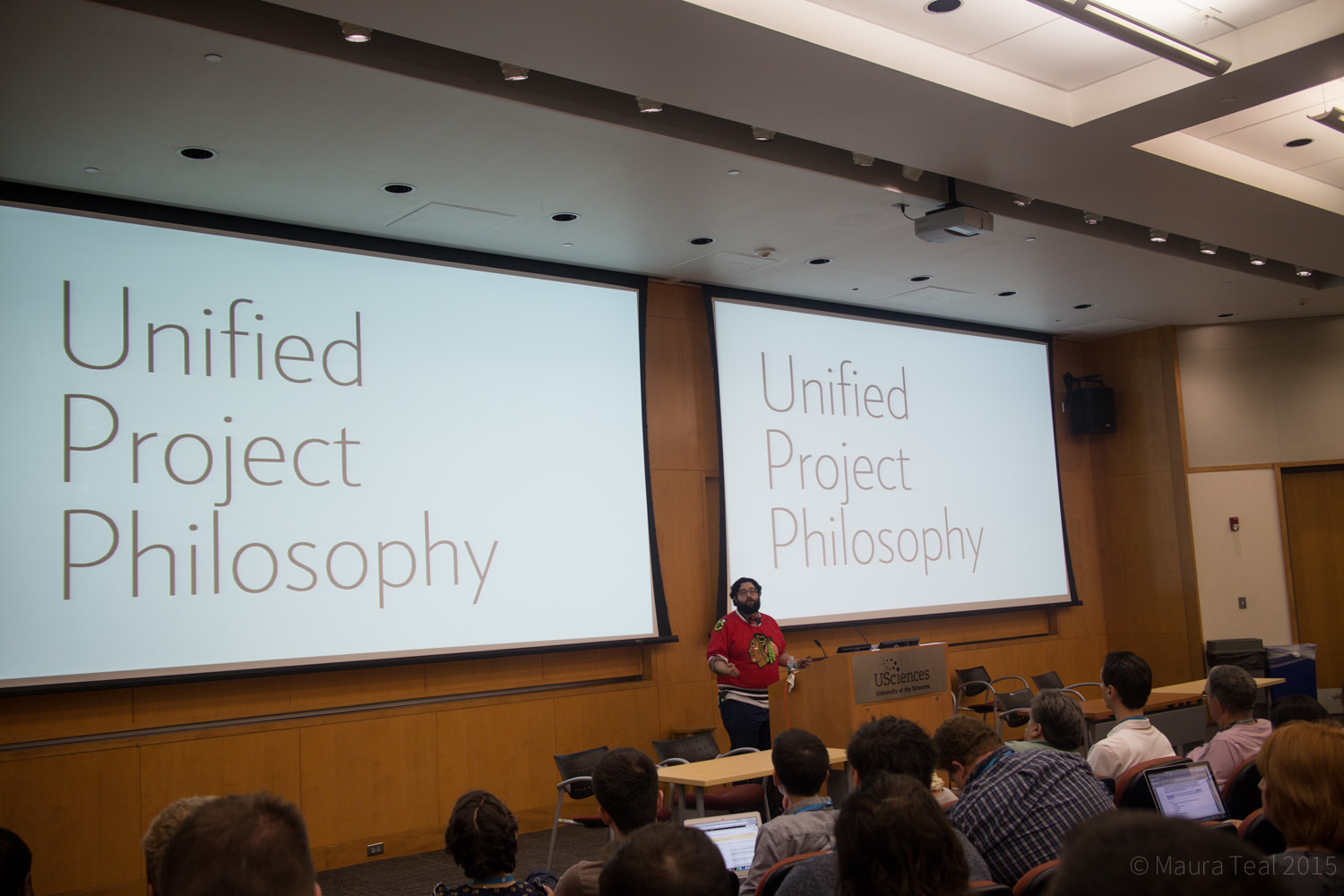
Thesis: Open Source and Design are fundamentally philosophically incompatible. Antithesis: Open Source and Design are profoundly similar in core beliefs and approaches. This talk works to articulate a meaningful synthesis between these two positions.
The talk, unfortunately, wasn’t accepted for presentation at the conference, but they suggested that instead I do a shorter, podcast or video podcast version for the Extended Content program.
I did, and that content now has gone live on the SXSW site:
In our first installment of the Extended Content series, John Eckman tells you everything you need to know about open source and design. The differences and similarities, how they benefit each other and why they have trouble getting along.

Extended Content at SXSW Interactive
(Unfortunately they don’t allow embedding, so you’ll have to go there to watch it – and at least on two browsers I tried it on, you’ll have to wait for the whole thing to preload before it starts playing – so go get a cup of coffee or whatever while it loads).
It’s just shy of 20 minutes, and having been created back in February 2009 feels (to me) a bit outdated in spots – mostly the continued evolution of the work Mark Boulton and Leisa Reichelt have been doing with the Drupal community (not just on Drupal.org but also on Drupal 7 itself), which I encourage you to check out if you’re interested in the subject.
Published on Monday, April 20 2009
Quick excerpt from an interview with Jeffrey Zeldman which includes some discussion of the impact of Open Source, and particularly open source CMS’s, on the process of designing and building web applications:
Although I think it’s important to draw a distinction between simple, relatively cheap licensing (the Expression Engine model) and Free and Open Source software, I generally agree that
Now, we have really powerful comparatively easy to understand, open source content management systems
And that this shift- from needing a large scale custom development project or an expensive proprietary CMS to now being able to leverage open source platforms – represents a key point in the maturity of web development.
Published on Monday, October 27 2008
While working on my PhD at the University of Washington, I taught for a couple of years in an Interdisciplinary Writing Program. The fundamental concept of the IWP was to address a fundamental problem common to first and second year composition classes, which is the lack of context.
(A brief aside on “writing in the disciplines” or “interdisciplinary writing” programs: Most college composition courses take one of two approaches: the either ask the students to write about literature or they take a topical approach, choosing topics in which they believe the students will be interested. The former approach assumes the students are interested in what the instructor is interested in, as many of these courses are taught by graduate students or professors whose real interest is something literary. The latter creates an environment in which the ostensible topic of the writing is an artificial academic context usually dealt with very superficially, since the real purpose of the course is the writing, not the topic. IWP and programs like it try to solve that by situating the students and the instructor in a real academic context: an existing undergraduate course in another discipline. The students’ writing tasks are situated in an authentic environment, where they are actually trying to understand and enter an ongoing academic discourse.)
I was reminded of the importance of context (and my love for the insights of the social sciences broadly) this weekend as I watched two videos from an event Microsoft Research held at MIT, to celebrate the launch of their new lab in Cambridge:
(Sorry for the mms links – you can rip them via mplayer if you need to watch in offline mode, but I think reposting them here would be considered a copyright violation).
Both really celebrate / argue for what we might call the situatedness of technology design: the ways in which an understanding of the cultural context of technology use needs to be brought back into the design of those technologies and how non-engineering approaches (from the social sciences in danah’s talk and from Design in Buxton’s talk) can help to provide that context.
Read more…
Published on Tuesday, August 12 2008
Last week, while I was on vacation meeting my new nieces and attending my 20th year high school reunion, the Panel Picker for SXSW 09 went live.
Although voting by prospective attendees is only “about 30%” of the decision making process, I figured I should promote my submissions here, and hope that readers of this blog might be interested in commenting on them or voting for them in the panel picker. (Although they call it the panel picker – no one can resist alliteration – it includes sessions which are solo speakers or dual speakers as well as more tradition 4-5 person panels).
So here are the sessions I proposed (links go directly to the Panel Picker):
Read more…